Tel: 0114 245 4449

Working with a UKAS Accredited Analyst

As a licensed asbestos removal company, the relationship between ourselves and the UKAS accredited analytical companies is vital. Each licensed job, and many un-licensed jobs, require a clean air clearance certificate at the end of removal works to provide evidence that the area is safe and un-contaminated.

We work together to ensure that our scheduled works are achievable, and as and when required they will work with us out-of-hours if needed by our client.

The analyst will attend the site for various different reasons and types of air clearances. Reassurance air tests are to provide peace of mind that fibres are not higher than expected, and personal air monitoring ensures that our employees are not inhaling an unsafe quantity of asbestos fibres. When our works are complete, a 4-stage clearance is undertaken, this involves

  1. Preliminary check of site condition and job completeness
  2. A thorough visual inspection inside the enclosure / work area
  3. Air monitoring
  4. Final assessment post-enclosure / work area dismantling

This 4 stage clearance certificate provides sufficient evidence that all asbestos fibres have been properly removed and can cause no harm. If this is not the case, it will fail at one of the stages and the contractors have to continue the cleaning process until satisfactory.

We provide all air clearance certificates to our clients upon request, and also the waste consignment notes.

Personal Air Monitoring
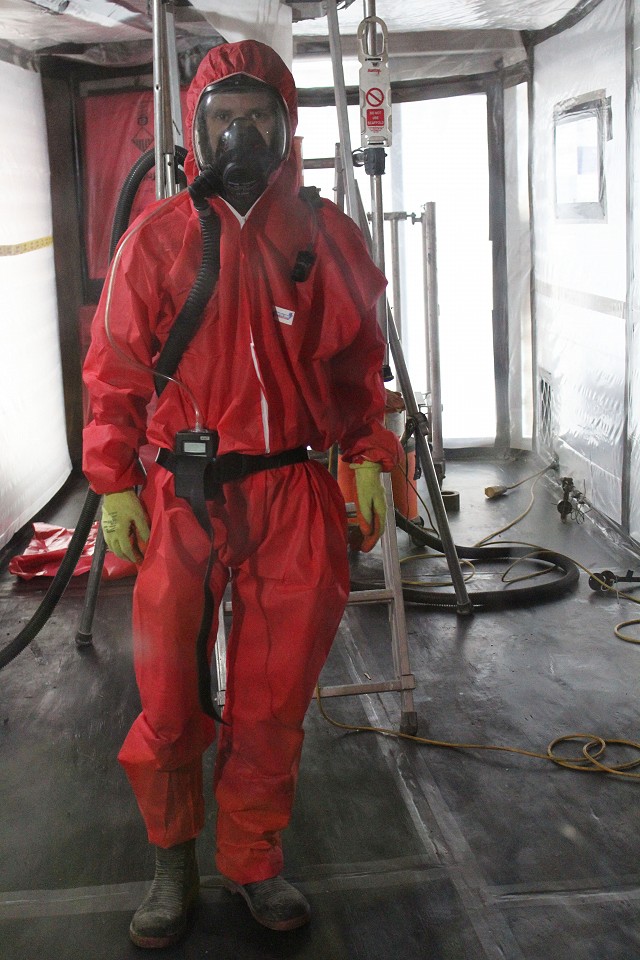
Asbestos operatives inside carrying out a personal air monitoring test

This operative is wearing the equipment required in order to detect personal air monitoring results.

Share this page

Asbestos Removal Services

Asbestos removal comes in many forms. These are categorised into four main areas, and we offer free advice on any aspect of Asbestos Removal and Encapsulation. Click on the service...

See All...

About e4 Environmental - Fully Licensed Asbestos Removal Company

Founded in 2006, we help people like you to remove asbestos in a regulated and safe manner. HSE certified, we are a fully-licensed asbestos removal contractor.

Read More...

Frequently Asked Questions

Some of the most common questions we get asked are answered below for you! For further information give us a...

Q: How many types of asbestos are there?

Asbestos has two sub-categories; Serpentine and Amphibole, defined by their difference in fibre qualities. In the Serpentine category is Chrysotile (also known as White asbestos) with S-shaped fibres. In the Amphibole category is; Crocidolite (Blue asbestos), Amosite (Brown asbestos) and also lesser-known Anthophyllite, Tremolite and Actinolite, all with straight fibres. To learn more about the history of asbestos, read our blog

Q: Why is asbestos hazardous to my health?

The fibres of the asbestos materials are long, thin strands that are very small. When inhaled, these fibres latch on to your lungs and organs and when built up over time can cause Asbestosis or Mesothelioma, both fatal and incurable diseases. For further information on why asbestos can be dangerous, read our blog.

Q: Why do some works have to be notified to the HSE?

In order to protect all members of the public from any unnecessary asbestos fibre exposure, the HSE requires certain types of works to be notified to them at least 14 days in advance in order to regulate and control the removal procedures. These types of works include certain fibres and ACM’s, and these works may only be done by licensed contractors. For more about the HSE process, head to their website.

See All...